Tonight’s the night to do something ‘once in a blue moon’

There’s a blue moon tonight. Not literally blue, but the kind of moon that only comes along now and again. A special kind of moon, when there are two full moons in a calendar month.

What would you do once in a blue moon…?    (pic: istockphoto.com/DougLemke)

I’ve been thinking I should honour the blue moon somehow. Do something I’ve been promising to do for a while. But then I realised that what I’ve been promising myself for some time is to take my focus off doing and instead concentrate on being. To remove that necessity to be busy. And instead enjoy the purity of a moment.

So tonight, for once in a blue moon, I’m going to just be.

Why I’m already humbled and inspired by the Paralympics

I’m forever reminding myself to be grateful for what I’ve got. Not always be looking for the next house, the next job, the next pair of shoes. To focus on what I’m good at. Not bemoan what I’m not.

Which is why the Paralympics Opening Ceremony for London 2012 has made me feel humbled and inspired.

Humbled because people accept their fate and just get on with things. Martine Wright, a woman who lost her legs in the 7 July bombings, has turned adversity into a triumph by becoming a Paralympic volleyball star. She slept 10 minutes longer the morning she ran onto the Tube and ran up the escalators and ending up sitting beside a suicide bomber. Other people may have reacted differently to losing both their legs. But she now believes this was meant to happen, and she feels so grateful that it did, because she’s now living a new dream.

Inspired because there is no limits to the generosity and wisdom of the human spirit. Professor Stephen Hawking, the most famous scientist in the world, implores us to keep striving and pushing boundaries. He said: “Look up at the stars and not down at your feet. Try to make sense of what you see and wonder what makes the universe exist. Be curious.”

I may not reach Professor Hawking’s insights, but I can resolve to be more curious in my own little way.

Can mindfulness with our children prevent parenthood regrets?

The biggest regret of parents is not spending enough time with their kids when they were young. They regret working too much, not appreciating that their children would grow up in a flash, not taking enough photos and not going on holiday enough with them. They also regretted worrying about the little things and not letting themselves go and enjoy the moment. That’s according to a survey commissioned by Huggies Little Swimmers nappy brand and published in the Daily Mail.

Mindful of how two-thirds of parents would do things differently if they could, I was more determined than ever to enjoy a half-term break with my eight-year-old daughter mindfully and fully. While she is still young and wanting to play with me.

I was more mindful on holiday with my daughter. With special moments, you either use them or lose them. 

I resolved to pay full attention to how many dives, handstands and lengths she did in the pool (instead of surreptitiously reading my book while pretending to watch her). I applauded when she came down the scariest of scary water slides. And I cheered when she was chosen to go on stage to take part in a tongue-twister competition. I savoured every minute, took as many photos as possible, and I can say I had no regrets about being fully present in the here and now.

Because I, like the parents in the survey, can feel time slipping through my fingers. I blinked and my baby is suddenly nearly as tall as me, and has picked up skills in persuasion, manipulation and negotiation. Each moment I spend with her is tinged with the reminder that this moment won’t come again. And there will be a time when moments like this don’t happen again.

So, I have no regrets about reading that article as a reminder to myself to be mindful. To remember that the human existential condition is such that we only have now. We can either live it fully or let it slip away unnoticed until we feel sad when we spot it in the rear-view mirror.

And the one main regret I certainly don’t have from my weekend away is my decision NOT to go down that scary slide.


The steps I take (literally) to avoid my novel

I had to laugh the other day when I was reminded of the phrase I heard in my teens about whether a guy is interested in you or not: ‘Don’t listen to the mouth. Watch the feet.’ I was never quite sure what it meant, but I thought it boiled down to ‘actions speak louder than words’.

What made me laugh, however, was how the body acts out what the mind (conscious or unconscious is feeling/wanting/wishing). Body language gives everything away, if you know how to read it. In my case, my body was literally ‘acting out’ what my mind was thinking.

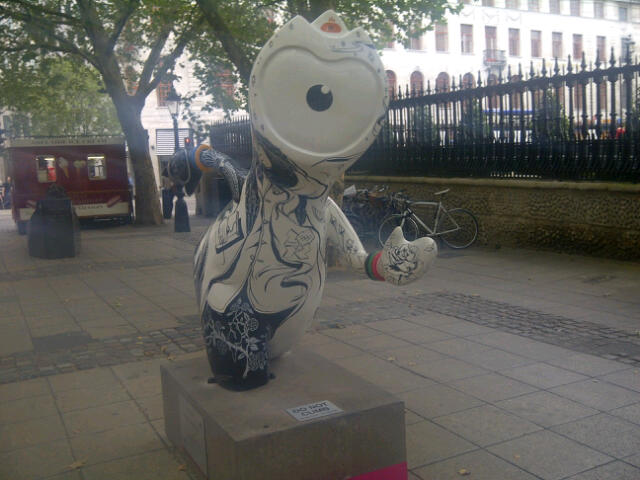
There are a bunch of temporary ‘Wenlock’ and ‘Mandeville’ statues around London as part of the Olympic Games London 2012 celebrations, which encourage little kids and grown kids alike to follow the ‘trails’ around London, being photographed at each one. Every Wenlock is detailed according to his environment, and so you have City Wenlock with bowler hat and striped suit, and a PhoneBox with suitably red phonebox attire.

How can I keep avoiding such an entertaining reminder of my novel?

Except that the Wenlock closest to where I work – as I discovered weeks after he was first placed there – is called Novel Wenlock. And I have been AVOIDING him every day, either walking past without noticing or taking a different route across a square rather than the direct route past him.

I laughed when I realised. Because I have totally been avoiding my novel (the one that passed the MA examiners, but which needs so much work on it still). Perhaps I’ll be more conscious and mindful of it now I know that I can’t pass by Novel Wenlock every day without saying hello.

Listening to negative people can make you dumb

OK, so it may not come as a surprise that hanging out with people who whinge and complain all the time isn’t good for your spiritual or mental wellbeing. But it turns out that all that negativity has a physical effect on the brain’s ‘muscle’ – and can make you dumb!

This article in Inc, Listening to complainers is bad for your brain, quotes a book by Trevor Blake, entrepreneur and author of Three Simple Steps: A Map to Success in Business and Lifewhich looks at how neuroscientists have measured the impact of complaining on the brain. It can apparently make you negative too  – even if you listen to it on TV or radio.

Blake says: “Typically, people who are complaining don’t want a solution; they just want you to join in the indignity of the whole thing.”

Time to tell them to sort themselves out, remove yourself from the situation – or, as he suggests, imagine you’re surrounding yourself in a protective ‘bubble’ or escaping to a secluded beach. Keep practising that technique, and it’ll keep you calm and free from negative infiltration.

How to make reading a treat, not a chore, for children

Allowing children to read ‘cool’ books rather than stiff old tomes the authorities think they should be ploughing through is the key to stimulating a creative love of reading. That’s according to a wonderful little article in the Evening Standard, Forget Austen, there are no explosions, which quotes Steven Moffat, the writer behind successful TV series Doctor Who and Sherlock.

Give a child a ‘cool’ book and she’ll devour it. Boring books get left on the shelf. (Pic: istockphoto.com)

He says: “We should give [children] really cool books that they think are exciting. It doesn’t matter if they are good books as long as they read. Reading makes you better at English. Reading a lot makes you want to read better books.”

He’s so right. I’m a professional writer now who can’t bear to flirt with badly written fiction. Life is far too short for that, and my bookshelves are stuffed with books I’d much rather commit to. However, as a 10-year-old child, I devoured just about every Continue reading

I wish dark chocolate could have saved my mother from dementia…

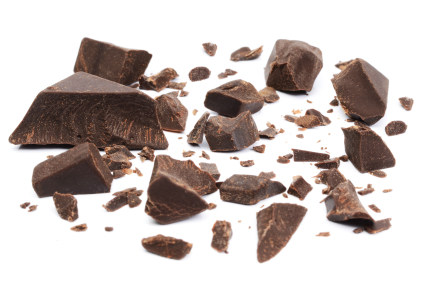
It was with a mixture of humour and sadness that I read in the news today that dark chocolate can help to keep dementia at bay

The humorous side of me was pleased to see that chocolate has a function beyond making us feel we’re not missing sex so much (or at least putting us in the mood for it).

Scientists at the Italian University of L’Aquila found that it’s the flavanols in dark chocolate (and in tea, grapes and red wine) that can improve the brain power of people over 70.

Scientists say dark chocolate can help keep Alzheimer’s at bay. (pic: istockphoto.com/unalozmen)

I love the fact that I have another excuse (as if I needed one) for another square of my favourite dark chocolate.The sadness comes from knowing that it’s too late for my mother, who’s been ‘owned’ by a swift and vicious form of dementia for about eight years. When she was way off approaching 70.

The irony – if you can call it that – is that she loved chocolate.  It’s just a shame she preferred the sweeter milk-chocolate varieties.

Now, where did I put my organic Green & Black’s…?

Seven life lessons from the Olympics

It’s the last day of London 2012. For two weeks I’ve been running (dashing to the nearest TV screen to see the latest race), jumping (for joy and with frustration as I will Team GB to win) and screaming (at the TV, because surely that helps our athletes to win!)

Being in London has swept me along with the excitement of it all. There’s a buzz in the air, a purpose in our day, and pride in our hearts. I think I’ll feel bereft once it’s all over – and I’ll be holding my breath until the Paralympics start in a couple of weeks’ time.

The Olympics are truly inspiring a generation. (pic: istockphoto.com/jokerproproduction)

As I reflect on two phenomenal weeks of athleticism, determination and sheer brilliance, here are seven life lessons the Olympics have taught me: Continue reading

A poem about a miscarriage

My heart went out to Gary Barlow and his wife Dawn when I heard how their baby Poppy had been stillborn. In my work as a therapist with women who have lost babies to miscarriage and stillbirth, I know there are intense feelings of loss around what might have been – the dreams that have been so cruelly taken away – mixed with intense gratitude for the blessings they do have.

A friend of mine recently miscarried her baby. She is a young, healthy woman, who already has a child, so she is baffled why she miscarried. She said: “When I heard about women who had miscarried, I used to think of it as matter of fact. But now experiencing it myself, it is a whole different world. It’s almost like I now belong to a club, where there are so many of us but no-one talks about it and women suffer in silence. Now I think: was there a spirit? Where has it gone? What was God’s reason to take my child away from me?”

I wish I had an answer. The way I chose to respond to her pain was in creative writing, via a poem:

To the twinkle that blinked Continue reading

What’s wrong with Silver anyway?

inktuition silver medal

People who win silver medals are more unhappy than those who win bronze. (pic: istockphoto.com/JayKJay21(

Why does not winning a Gold medal suddenly make you a ‘ loser’? Like most people in London and around the world, I’ve been glued to the Olympics over the past week, mesmerised by the athletes’ physical prowess and inspired by their dedication, their spirit and their drive.

What I’m not getting is why it’s suddenly a huge disappointment to get Silver or Bronze in the medals. OK, so there’s a lot of pressure on Team GB because this is London 2012: an Olympics on their home turf. But from swimmers to cyclists and rowers, when they ‘fail’ to reach Gold, they apologise for letting everyone down. They’re in tears (in what is becoming an emotional Games) – even though they say  they’ve tried their very best – and some threaten to withdraw from sport entirely. It hasn’t helped that Continue reading