When it comes to art, taste matters more than ‘mere exposure’

I’ve fallen in love with works of art in my time. The kind of all-consuming ‘at first sight’ love that has to possess – at whatever cost – the object of beauty. I’ve bought paintings that made me stop still in my tracks, that reached out and tickled my spine and twisted the valves of my heart. Oh, and maxed out my credit card. But for me, they are priceless because I remain in awe of the way the art speaks to me on a level of colour and soul that black-and-white words can never quite reach.
inktuition art

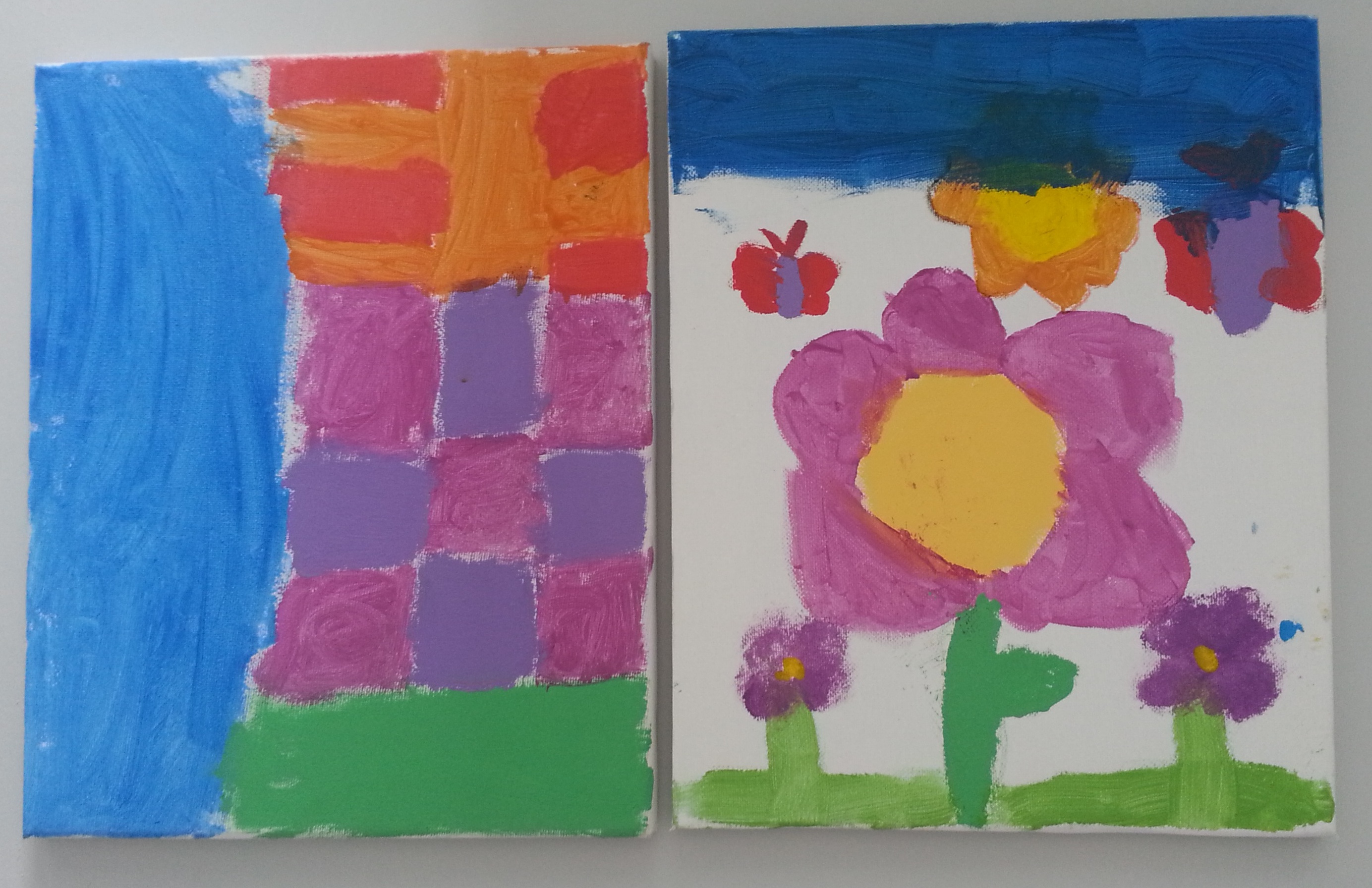
Once I’ve fallen in love with a piece of art, there’s no going back. And I don’t care whether the artwork is considered ‘good’ or ‘bad’ by critics or experts. I love it, and that’s all there is to it. (Even these cute pieces by my daughter, above).

Which is why I was fascinated to read about an experiment carried out by the University of Leeds, which asked if increased exposure to a piece of art will make us like it more. The experiment pulls on the theory of  ‘mere exposure‘, which says that we’ll start liking something if we keep seeing it often enough.

Except that we don’t. The 100 students who took part in the study still hated the ‘bad’ art even when exposed to it, and the researchers concluded that “quality, and not just familiarity, remains in the picture”.

The full findings appear in a paper, Mere Exposure to Bad Art, published in the British Journal of Aesthetics. But I think the key point they make is this: “At issue is the role that artistic quality plays in determining our aesthetic tastes.”

Quite. I think they’ve proved my point.

Why some kinds of grief never die

My father died 14 years ago this evening: 10 minutes to 10pm on Thursday 11 March 1999. I don’t think there’s been a day gone by when I haven’t thought about him.

It’s worse in the early days, of course, when the thought flashes across my mind that I want to make that phone call to him to joke about something funny I’ve read in the paper or heard on the radio. And then I realise with searing pain to my heart that I can’t. Because he’s gone. Fourteen years down the line, the urge to speak to him is the same, and the pain of loss around his anniversary is almost as keen as when he first passed away.

I remember three months after he died, a so-called ‘friend’ said I should be over it by now. Be over what, exactly? The tears, the numbness, the inability to accept that such a mighty man had been snuffed from my life?

After the shock and all the fuss of the funeral and the sympathy cards, people’s interest wanes. Their life gets back to normal. But for a bereaved daughter there is no getting back to normal. There’s only the day-to-day getting through, and the renegotiating a life whose volume has been dialled down several notches. Whose colour is a few shades faded. Whose fabric of hope has been ripped to shreds.

So I don’t believe in ‘getting over’ grief. Yes, there are ‘stages’ of grief to be ‘worked through’ and the loss to come to terms with. Eventually. But I defy anyone who’s lost someone darling and dear to them to say that one day they’re completely ‘over it’.

Grief will always have a grip on my heart. But perhaps by remembering my sadness, by honouring my grief, I am keeping alive my father’s spirit within me.

How can I celebrate Mother’s Day when my mum has dementia?

inktuition dementia mother's day copy

Mother’s Day hasn’t been the same to me for the last four years. Yes, I have a mother who’s alive. But no, she hasn’t known I exist for the past handful of Mothering Sundays.

My mother is 68 years old. She has Pick’s Disease, an aggressive form of dementia. The illness has had her in its vicious and unrelenting grip for at least 10 years.

Unlike other gradual forms of dementia that strike when the person is older, my mother’s strain came early and was swift and debilitating. Four years ago she knew me, she came on holiday with me, and she looked like a ‘normal’, healthy woman in her mid-60s. Yes, she was conscious that she was losing her memory. But she could still walk, talk, feed herself and go to the toilet and have a bath on her own. She could even dress herself and order herself a cup of tea – though money could be an issue, as she’d be inclined to forget where it was or just hand over far more cash than was required.

In the space of four years, she degenerated from a functioning human being to a bedridden soul who has the cognitive and physical abilities of a six-month-old baby. She can’t sit up. She can’t walk.  She can’t tie her shoelaces. And she can’t count. She doesn’t know her own name. And she certainly doesn’t know who the strange person is sitting beside her bed. Just as a child learns new skills, she has gradually been stripped of hers. As I am stripped of hope.

It’s been about two and a half years since she last recognised me. The last time she was able to talk coherently, she was fighting with her carer who was trying to get her into the car. And when I said, hey, it’s your daughter, come with me, she replied with much authority: “I don’t have any children!” At that stage she was regressing into her very early years, the way people with dementia do. And I had to hold the hurt of rejection without being able to show it.

So, the poor soul into whose eyes I look for some kind of flicker of remembrance remained lost and on the tips of her own netherworld today. Just as I remain lost in that space with a mother in body, and yet without a mother in mind.

What gets me through Mother’s Day is knowing that, somehow, I still have a mother in spirit.

Poem: The Creative Escapee

Your boss is always right, she says,

As she wields a pen of heavy red

That bites and wounds my worried words,

And my former self-belief goes blurred.


Your boss is always right, she mouths,

As my typo sends her humour south.

I hang my head, gut full of shame,

Have all my creative leaps gone lame?


Your boss is always right, she shouts,

As my brain cells begin to cower in doubt:

Is my work that flat, that nondescript,

Does her critique always have to be sour-lipped?


Your boss is always right, she yells,

As I reflect upon this straitjacket hell

Of rigid rules, of constant digs.

A model of how you can’t forgive.


Your boss is always right, she screams

Hysteria’s norm? That’s what it seems.

A dumbed-down doer is all she wants,

But there’s more to me than a size-12 font.


I may type your amends

With intentions well meant

But you can’t reach the real me

‘Cos I’m a Creative Escapee.


So yes, the boss is always right

But the red pen certainly doesn’t delight.

What rules my world is being in sync

With my authentic guide of true-self ink.

I Am Enough: a poem to fight feeling ‘less than’

When somebody makes me feel less than,

Says I’m too much can’t, not enough can,

There’s a fear that jellies my thighs,

And my heartbeats double their size.


My essence of soul gets lost

As my fingertips turn to frost.

And I scrabble to save my self-esteem

As it’s chased by monsters in my dreams.


My sense of self loses all its shape,

My presence shrivels like a sad old grape.

As I creep away, full of blame and gall,

The shivers of shame make my skin cells crawl.


I feel nothing of worth, my confidence kicked,

My value rusted, my optimism pricked.

I retreat to a cave, all dark and dank,

Knowing I’ve only got myself to thank.


But at my core there’s a flicker of flame.

Really, this time, is it same again?

Will I let them all tread

On my bowed, mournful head?

Or will I rise from the wreck of this feel-sorry stuff

And say to the world: “I am enough!”

Remember to stop and savour the snowflakes

Snow this week in London has caused late journeys, frozen toes, and hours of scraping windscreens free of ice. I’ve been in a hurry to get to meetings and carry on a normal life this week, the frankly the snow has been a pain in the backside. It took me 20 minutes to liberate my car from inches of snow. I then had to negotiate an ice rink of a car park that almost robbed my proud little car of its oomph. And you can’t get in my hallway for dripping boots, soaked gloves and padded coats.

I hadn’t stopped to enjoy the snow at all. I didn’t take a red sledge to the hills behind my house and hear my daughter’s pink-cheeked whoops of joy as she careered down the slopes. I didn’t join in with the neighbours as they shovelled our road back to black (a precipitous task, given the three-day snowfall we had). And I didn’t rush to find a carrot suitable for a snowman’s nose. It was as if the snow hadn’t happened at all, for all the attention I had paid to it.

Snowflakes reminded me to appreciate everyday precious moments    (pic: istockphoto.com/djedzura)

Until last night, that is. I was walking along the road to get my car, avoiding the slippery pavements packed with ice. And I suddenly realised it was snowing again. It was nine at night, and the streetlamps illuminated the fragile puffs of white tumbling out of the sky. It felt as though that snowfall was a show specially created for me. I stopped on the street corner and looked up at the marvel of those perfect little snowflakes. Collectively they may be a nightmare. But individually they are delicate little things of beauty.

They brought a tiny tear to my eye and a warmth to my heart. A former boss of mine, watching me run around like a mad thing, always said to me: “Remember to stop and smell the flowers.” He’s not around any more, but this phrase lingered. And last night’s snow reminded me to appreciate the divine magic in the things around us that we take for granted.

The snow is fluffier this year. Not so great for snowmen. And not too good for train operators or commuters. But absolutely perfect for pulling a lost woman back to the present. I may have disconnected from the world temporarily. But those little snowflakes had a big role in making me feel alive again.

When too much criticism cripples creativity

My heart goes out to the artist who painted the first ever portrait of the Duchess of Cambridge. Paul Emsley’s work of art, on display in London’s National Portrait Gallery, has been slated by the media and the critics. One even called the painting ‘rotten’. And that criticism cut him deeply to the point of making him doubt the value of his work.

An article in London’s Evening Standard, Mr Emsley says the reaction to his portrait of Kate has been like a ‘witch hunt’. He is quoted as saying that some of the words said about the painting were vicious and personal, and “I’d be inhuman if I said it didn’t affect me”. He added that there came a point when he “doubted that the portrait of the duchess was any good”. But he has coped with it by going back into his studio and “getting on with it”.

All artists, whether they use a paintbrush, a pen or even a pair of ballet shoes, express themselves through their creativity. And that creativity can get crushed when some people believe they’re in a position to tut with superiority or wag their finger with self-righteousness. The act of creating can be fragile. And the door to the creative unconscious can be slammed shut by unthinking, unfeeling criticism.

Mr Emsley just got on with it. Not everyone can just ‘get on with it’ when they’ve had the kind of criticism that cuts to the core. But it’s the act of continuing to do what you believe in that encourages creativity to come out of hiding. Plus, Mr Emsley I’m sure can take some comfort from knowing that the postcard of Kate’s portrait is reportedly one of the fastest selling ones in the gallery.

Never mind my inner voice, it’s my gut that tells me what to do

I’ve been tussling with a particularly painful problem, torn between taking a leap of faith (and all the fear that entails) or staying put (with all the ensuing resentment).

I know that all the answers reside within, but that doesn’t stop me turning to friends for their perspective. My inner voice has gone rather quiet, and no forcing will entice it out of hiding. Which is why I’m relieved that my intuition, my inner guidance, mainly tends to come from my gut. I’ve had a knot in my stomach for weeks, as though a fist were clenching my solar plexus.

CSo, to test out the two options in the decision I have to make, I rolled them around in my thoughts, one at a time, to see how my body reacted. Outcome one (staying put and trying to remedy a situation that I feel is beyond repair) kept the fist clenched. Outcome two (jumping out and hoping to make my wings on the way) amazingly unclenched the fist in my stomach. It was as though a scatter of coloured plastic bricks were tumbling into my belly. Free. Creative. Alive.

I guess option two is the one to take. All I need to do is assemble those tumbling bricks into a shape that best suits this new free me.

My bracing New Year’s Day in photos

What better way to celebrate the first day of 2013 than on a bracing visit to the Brighton seaside. With my only New Year’s Resolution being ‘gratitude’, I was blessed to tiptoe on the cobbled beach and take some stunning shots that capture the beauty of today’s extremely welcome (although unusual, given the recent torrential rain the UK has suffered) and benign sunshine.

The winter sunlight is putting the smile on our faces

The winter sunlight is putting a smile on our faces

The waves are frisky and a real treat to run in and out of (in spite of the cold!)

Continue reading

The ‘write-rip-throw’ approach to ditching negative thoughts

Negative thoughts making your life a misery? Well, rather than ruminating on them and giving them oxygen, there’s a simpler way of getting rid of them. Just write them down on a piece of paper, rip them up and throw them away.

Write your bad thoughts down and let them go to be free of them. (pic: istockphoto.com/AnikaSalsera)

Write your bad thoughts down and let them go to be free of them. (pic: istockphoto.com/AnikaSalsera)

Sounds too easy? Too free of angst? No use if you just can’t let go…?

Research begs to disagree. It’s people who hold onto their negative thoughts who preserve them. Physically binning them – rather than just imagining you’re throwing them away – takes away their power. Here’s how… Continue reading