Am I the only writer for whom an MA achievement is an anticlimax?

I’ve been trying to put a name to the feeling that’s mine right now – and all of London’s. Not to big myself up, or minimise the impact of London 2012 and the phenomenal achievements of the Olympians and Paralympians. But there’s something in the air that I’ve been trying to feel, own, and put into words. Without sounding ungrateful. Or like a next-project-obsessed workaholic.

Even the best parties have to come to an end.

OK, so I may be both of those things. At times. But this feeling is like the puckered balloons the day after a mega party. The dust-covered peanuts you find down your sofa weeks after a dinner party. And the sense of having loved (all the guests) and then lost (when they all leave) when you’ve worked so hard and wanted to make every detail a winning, talked-about one. Which parties generally are, and they certainly were for the million people I had to say ‘excuse me’ to, on a way to a meeting through central London at lunchtime yesterday. A million people lined the streets to salute the London 2012 stars.

But my individual deflated feeling, in the midst of all this post-Olympic partying, started with the certificate arriving for my MA. Continue reading
Expressing your fears takes their power away

It’s something therapists and writers have known for years, but now psychologists have confirmed that naming your fears stops them having so much power over you.

Giving a name to something, or expressing exactly how you feel, means you don’t have to deny the feeling or keep squashing it down. Sometimes the energy needed to keep it at bay is more painful and stressful than just talking about it anyway. Writers use that technique all the time: expressive or reflexive writing puts into words their feelings and stresses, and therefore externalises what’s going on inside and helps to process feelings and look at them objectively.

Researchers from the University of California, Los Angeles (UCLA) did some tests on people who are afraid of spiders, asking some of them to approach a tarantula, and to experience and label their fears. For example, to say: “I’m anxious and frightened by the ugly, terrifying spider.” People who were able to express their fears were able to get closer to the tarantula, and had less of a stress reaction.

Michelle Craske, a professor of psychology at UCLA and the senior author of the study, said: “The implication is to encourage patients, as they are exposed to whatever they are fearful of, to label the emotional responses they are experiencing and label the characteristics of the stimuli — to verbalise their feelings. That lets people experience the very things they are afraid of and say: ‘I feel scared and I’m here.’ They’re not trying to push it away and say it’s not so bad.”

The crucial point is this: “Be in the moment and allow yourself to experience whatever you’re experiencing.”

Writers are beating procrastination by blocking their internet access

I’ve read some insightful and hilarious articles on procrastination this week, from writer Rowan Pelling’s piece on Why do we procrastinate so much? to the follow-up response on the BBC website Procrastination: Readers’ epic tales of timewasting. The lengths some people go to – just to avoid doing a task they don’t want to do – are astonishing.

Problem is, I can identify with some of them – ok, not some of the more extreme tactics, but certainly the ‘oh, that bottom drawer of the fridge needs to be cleaned out urgently’, or ‘I really need to help my daughter complete that 500-piece jigsaw puzzle’. The worst, of course, is that quick flick onto a news website, just to check what’s going on in the world, only to find that more than an hour has passed and I still haven’t got beyond paragraph two of the project I was meant to be focusing on that’s now got a looming deadline.

Which is why I was curious to hear that famous authors are turning to internet-blocking software to stop them getting distracted from writing their next novel. Zadie Smith did it for her latest book, NW, according to the Daily Mail – and Nick Hornby also apparently uses similar software so he isn’t tempted to wander onto the net when he should be clocking up his word count for the day.

Some of the comments at the bottom of the Daily Mail story also made me laugh, mocking the writers for turning their internet connectivity on in the first place. But I can see the point if you’ve got publishers and readers waiting for your next work of art.

Otherwise, if writers really can’t resist the lures of the internet on their laptop, they could always return to using pen and paper. But that’s another discussion entirely…

The steps I take (literally) to avoid my novel

I had to laugh the other day when I was reminded of the phrase I heard in my teens about whether a guy is interested in you or not: ‘Don’t listen to the mouth. Watch the feet.’ I was never quite sure what it meant, but I thought it boiled down to ‘actions speak louder than words’.

What made me laugh, however, was how the body acts out what the mind (conscious or unconscious is feeling/wanting/wishing). Body language gives everything away, if you know how to read it. In my case, my body was literally ‘acting out’ what my mind was thinking.

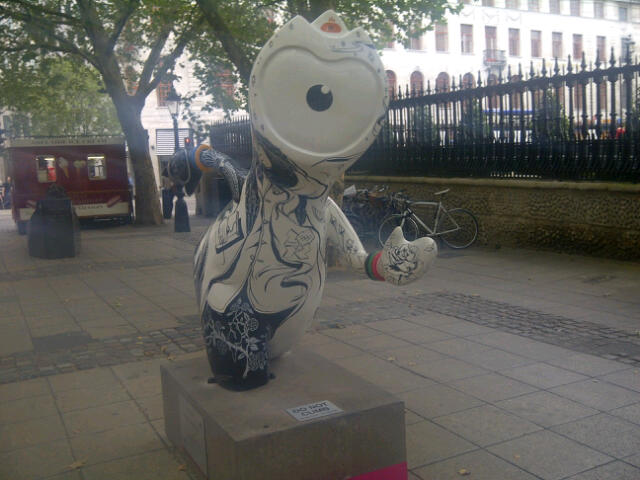
There are a bunch of temporary ‘Wenlock’ and ‘Mandeville’ statues around London as part of the Olympic Games London 2012 celebrations, which encourage little kids and grown kids alike to follow the ‘trails’ around London, being photographed at each one. Every Wenlock is detailed according to his environment, and so you have City Wenlock with bowler hat and striped suit, and a PhoneBox with suitably red phonebox attire.

How can I keep avoiding such an entertaining reminder of my novel?

Except that the Wenlock closest to where I work – as I discovered weeks after he was first placed there – is called Novel Wenlock. And I have been AVOIDING him every day, either walking past without noticing or taking a different route across a square rather than the direct route past him.

I laughed when I realised. Because I have totally been avoiding my novel (the one that passed the MA examiners, but which needs so much work on it still). Perhaps I’ll be more conscious and mindful of it now I know that I can’t pass by Novel Wenlock every day without saying hello.

Do successful authors have doubts about their talents too?

I guess I imagine that once you’ve got a few successful novels under your belt, and your work is adored by readers and feted by critics, that you’d feel confident about your talents. However, there is all the pressure that goes with that – and can the fourth and fifth novels be just as good as the first and second?

This seems to be the case with Zadie Smith, who is extremely modest about her abilities. In a brief article in the Evening Standard, Accolades fail to ease Smith’s nerves, she is quoted as saying: “You have to struggle with each page. It’s very hard to listen to yourself for that long and feel that — even if you have had a career of some kind — someone wants to hear or read it.”

Her last book to be published was On Beauty in 2005. Her new novel NW is due out in September and is billed as a “dazzling portrait of modern London”.

I can only empathise with the very real pressure she must be under – from herself as well as external factors like publishers and reviewers – and I’m sure her new novel will be as brilliantly original and unputdownable as her others.

How to make reading a treat, not a chore, for children

Allowing children to read ‘cool’ books rather than stiff old tomes the authorities think they should be ploughing through is the key to stimulating a creative love of reading. That’s according to a wonderful little article in the Evening Standard, Forget Austen, there are no explosions, which quotes Steven Moffat, the writer behind successful TV series Doctor Who and Sherlock.

Give a child a ‘cool’ book and she’ll devour it. Boring books get left on the shelf. (Pic: istockphoto.com)

He says: “We should give [children] really cool books that they think are exciting. It doesn’t matter if they are good books as long as they read. Reading makes you better at English. Reading a lot makes you want to read better books.”

He’s so right. I’m a professional writer now who can’t bear to flirt with badly written fiction. Life is far too short for that, and my bookshelves are stuffed with books I’d much rather commit to. However, as a 10-year-old child, I devoured just about every Continue reading

I wish dark chocolate could have saved my mother from dementia…

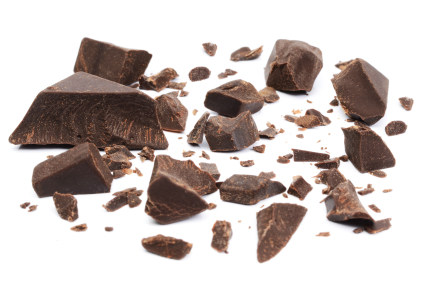
It was with a mixture of humour and sadness that I read in the news today that dark chocolate can help to keep dementia at bay

The humorous side of me was pleased to see that chocolate has a function beyond making us feel we’re not missing sex so much (or at least putting us in the mood for it).

Scientists at the Italian University of L’Aquila found that it’s the flavanols in dark chocolate (and in tea, grapes and red wine) that can improve the brain power of people over 70.

Scientists say dark chocolate can help keep Alzheimer’s at bay. (pic: istockphoto.com/unalozmen)

I love the fact that I have another excuse (as if I needed one) for another square of my favourite dark chocolate.The sadness comes from knowing that it’s too late for my mother, who’s been ‘owned’ by a swift and vicious form of dementia for about eight years. When she was way off approaching 70.

The irony – if you can call it that – is that she loved chocolate.  It’s just a shame she preferred the sweeter milk-chocolate varieties.

Now, where did I put my organic Green & Black’s…?

Why I’ll always be Queen of the Last Minute

Without the last minute, so the old saying goes, nothing would ever get done. Give me extreme pressure, less time than I actually need, and I’ll whip that deadline into shape. And produce something brilliant. Leave the ending open and the task will hang around tormenting me. And anything I do attempt to produce will be flabby or fall flat (in my mind, anyway).

Who can resist the urge to beat the race against time…? (istockphoto.com/Watcha)

Except I thought I was better than that: I’m a consummate planner, with a social diary that is meticulous and varied, and a work diary that is packed and tightly managed. So why is it that a task comes along that I don’t want to do, and the not-doing the task drains more energy than actually doing the task would.

Nothing is so fatiguing as the eternal hanging on of an uncompleted task,” says William James.

Quite.

Here’s another great quote about procrastination: “If you want to make an easy job seem mighty hard, just keep putting off doing it.” Olin Miller

There’s been a mighty hard job hanging around my shoulders over the last three weeks. Not hard in terms of Continue reading

A poem about a miscarriage

My heart went out to Gary Barlow and his wife Dawn when I heard how their baby Poppy had been stillborn. In my work as a therapist with women who have lost babies to miscarriage and stillbirth, I know there are intense feelings of loss around what might have been – the dreams that have been so cruelly taken away – mixed with intense gratitude for the blessings they do have.

A friend of mine recently miscarried her baby. She is a young, healthy woman, who already has a child, so she is baffled why she miscarried. She said: “When I heard about women who had miscarried, I used to think of it as matter of fact. But now experiencing it myself, it is a whole different world. It’s almost like I now belong to a club, where there are so many of us but no-one talks about it and women suffer in silence. Now I think: was there a spirit? Where has it gone? What was God’s reason to take my child away from me?”

I wish I had an answer. The way I chose to respond to her pain was in creative writing, via a poem:

To the twinkle that blinked Continue reading

The two decisions I made that helped me finish my novel

Like many writers, I’d been working on a novel for years. The idea for it came into my head, skittered across the page for a while, then exited stage right. I dragged it back on to perform, reluctantly, for many years – and each time it looked more awkward than before, and with increasingly palpable and self-destructive stage fright.

I so wished I had allowed the creative novel-writing impetus more time and space in my life while it was fresh and energetic, rather than cowed and defeated. Six years on – and already six months into the grace period of my extended Creative Writing MA deadline, with very little developmental or restorative work on my manuscript – I was considering asking for another extension.

Except that this time Continue reading