A poem: on silent retreat – day one

I was told to shut up as soon as I could talk,

so finding my voice has been tough.

There was never space to have my own thoughts

Never mind express what I love.

Now I’ve chosen to close myself from the world

and turn much deeper within.

A few days in silence, what will unfurl?

At least a break from my daily din.

What will I find, when my ego’s been stripped,

when I read from my sacred scroll:

will I find scribble or beautiful script

in the cavern of my heart and soul?
Why a poem a day keeps procrastination at bay

I loved taking part in National Poetry Writing Month (NaPoWriMo). OK, so I didn’t manage the full 30 poems in 30 days, but I did post 26 out of the 30 ( I started two days late anyway).

I’m proud of what I achieved. I rocked up at the page pretty much every day for a month and wrote rhyming words about something front of mind that day.

Here’s what I learned from taking part in NaPoWriMo:

  1. I committed to something publicly. Therefore I felt duty bound to honour that commitment. 
  2. Poems are fantastic at capturing a tiny fragment of time. 
  3. I wrote poems about completely random things, like my kitchen skylight and a scarecrowess I photographed at a farm.
  4. I had no idea what I was going to write about until I sat down with my laptop.
  5. I only like writing poems that rhyme. They make me feel held and contained.
  6. The discipline of writing a poem kept my thoughts and feelings focused.
  7. I didn’t do any censoring. I just let the poems flow. 
  8. I wrote for fun and challenge, not for any other reason.
  9. I never found excuses not to write the poems. The only days I missed were times I was busy with family stuff and nowhere near my laptop.
  10. Today feels odd not writing in rhyme.
  11. Sometimes I ran out of ideas but still wrote a poem anyway.
  12. I love the discipline and shape of the poems I wrote. 
  13. I noticed that my repetitive themes are about shadow and death. Existential issues evidently emerging.
  14. I will continue to write poems as the mood takes me. I do anyway, but I have exercised a muscle that will need to be used and stretched regularly.
  15. Hidden pieces of me are now being seen. The act of revealing is where the healing happens.
  16. Other bloggers liked my poems. How generous the writing community is.
  17. Some of my poems got favourited on Twitter. How humbling that was.
  18. I felt resentment some days, but wrote anyway.
  19. I feel I have grown as a person.
  20. Procrastination didn’t even get a look in. If you want to get writing, get poem-ing.

Thank you, NaPoWriMo!

A poem about a cruel word

Criticise me to make you feel big

Belittle my efforts to cut me quick.

Pick your topic to slice me deep,

one that’s callously, coldly cheap.

Mock my spirit, fool my world.

Your cruelty’s the grit to my inner pearl.

Because in your denial you’re up to your eyes.

So who are you to criticise?

For NaPoWriMo Day 18

A poem by the dust under my bed

 I’m made of old skin and yucky stuff.

You can clean all day. It’s never enough.

I collect and clump. The havoc I create

absorbs your projected rage and hate.

With subtle poise I get up your nose.

You sneeze. You curse. A life decomposed.

I lurk. I linger. I’m a puffball of shame

that with your duster you think you can tame.

But I’ve got a special kind of knack

To outlive all threats of attack.

Mop, sponge or sucking vacuum,

I’m stubbornly stronger than a sweep of your broom.

So leave me be. Leave the dust to the dead.

For today, go out and be yourself instead.

A poem: the battle of him and me

He wants it quiet. I like it loud.

He prefers himself. I crave a crowd.

Listen to the battle of him and me.


He needs attention. I create it all.

He wants to know what’s real. While I just feel surreal.

Sense the battle of him and me.


He likes his sauce red. I much prefer brown.

He always shops for stuff. I prefer to verb and noun.

Articulate the battle of him and me.


He wants it every day. I’m more like once a week.

He’s pret-a-porter. I’m much more boutique.

Wear the battle of him and me.


He can forgive. I can judge and blame.

He sleeps with calm. I lie awake with shame.

So maybe this battle’s between me and me.

A poem for Good Friday

inktuition good fridayI’ve always wondered what was hiding in Good

about a Friday that foretells a death,

where a revered man is nailed to a cross

with the scent of vinegar on his breath.

Dying he destroys our sins

is the story I’ve been told.

But what the story means to me

is a transforming that will unfold.

I had to explain, one random year

To an au pair of Easter knew nought.

So I explained that trust and hope and faith

can get lost in the cycles we’re caught.


We’re meant to believe that all will be right,

when cometh that sacred relief,

But when agony pricks the white of my eyes

I’m tumbling into my own grief.

Metaphor’s the cross, I know all of that

because problems resolve in their time.

Let it go, they say. Let fate do its work,

let your bum note again find its rhyme.

Soul symbolism: If there’s no such thing as an ‘accident’, what does my bumped car mean?

“Superstition and accident manifest the will of god.” C. G Jung

“The ideal man bears the accidents of life with dignity and grace, making the best of circumstances.” Aristotle

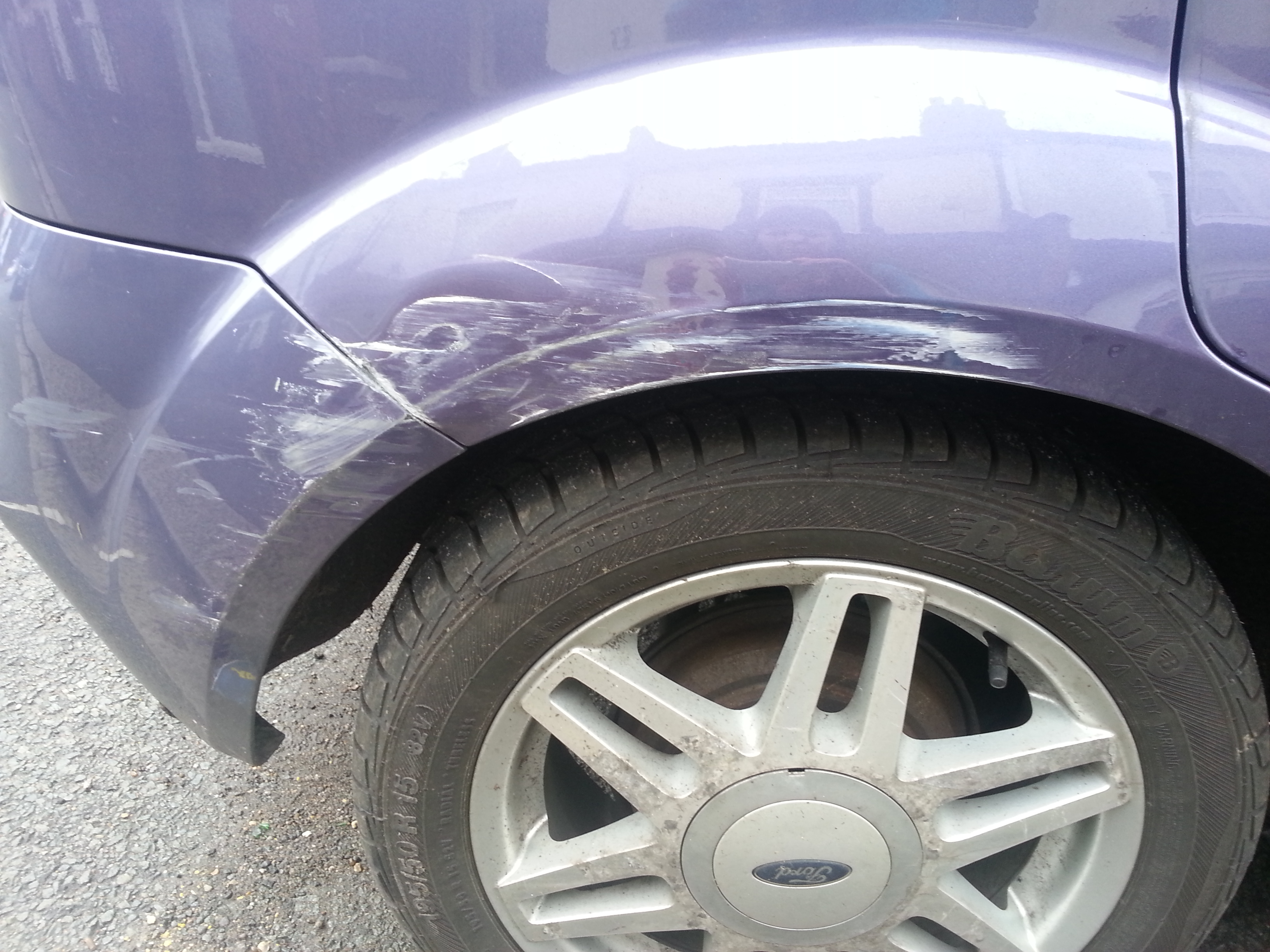
inktuition car bumpMy car got bumped today. To be specific, the other driver thought he had more space than was actually there and, in his impatience to get through the too-tight space, his car gouged the side of mine. Or at least, that’s what it felt like as his metal got intimate with mine. It sounded as though he’d put a huge gash in the side.

He admitted liability and ran off to get his insurance documents. I stood there in wobbly shock, mind blank with what to do next in this situation, while other drivers in various states of hurry swore at me to move out of the way. Not a pleasant or uplifting experience for eight o’clock in the morning.

OK, so the physical damage was minor. But emotionally the bump has ricocheted through my day. I certainly didn’t feel I was handling this accident with grace or dignity. I’ve never had to claim on my car insurance before, and I’m loathe to start now. But more than that, I always interpret symbolically the events major and minor that happen in life, believing that Jung says about there being no such thing as an accident. If that’s the case, then what could the bump on my car mean, and what have I learned from it? Is there a deeper meaning? What’s my soul trying to communicate with me.

As I always do, I turn to my laptop for inspiration and insight. Through my keyboard I make sense of what’s happened and seek some kind of clarity and release. So, intuitively, here are the different levels of my thinking:

  1. It’s just a bump. It’s all the other person’s fault. He should learn how to drive better. (Not a very empowering way to look at this).
  2. Cars can signify goals and getting places. Is the bump a way of slowing me down and making me reassess the path I’m on? (Could be helpful to take some time to reflect and improve self-awareness and alter my road, if necessary).
  3. The bump was on the right-hand side of the car. The right represents the masculine. Which part of me is the bump targeting? Which masculine energetic part of me is the bump making me slow down to consider? I’ll have to reflect more on this one, but it’s one to stick with.
  4. What quality has manifested as a result of the bump? If I’m being honest, the whole debacle has been a lesson in patience. Perhaps the ‘accident’ will teach me to leave the house earlier and not rush down a crowded road full of other people in a rush, waiting to bump and shout at me. (Yes, patience isn’t a quality I have in abundance, so this insight has deep meaning for me).
  5. I should be more mindful of everyone around me instead of always being head down to chase deadlines. Perhaps the bump was a reminder of how precious life is and how we can’t take things for granted mindlessly. The bump brought me straight back into the present and I’ve been driving oh-so-carefully all day. The car, as a representation of my conscious self in this world, has just been brought back into sharp focus. My attention is now revved.

Points 4 and 5 have the most resonance for me. Perhaps this tiny little knock on my car was a wake-up call, bringing me back to the moment. For other meanings, I’ll let them meander into my head next time I’m on a long drive (as ideas usually do when I’m nowhere near a pen to write them down).

I can already feel that the act of letting the ideas flow through my fingertips has restored me to some kind of dignity, and the bump no longer has its insidious grip on me. Perhaps it was no accident after all.

Why some kinds of grief never die

My father died 14 years ago this evening: 10 minutes to 10pm on Thursday 11 March 1999. I don’t think there’s been a day gone by when I haven’t thought about him.

It’s worse in the early days, of course, when the thought flashes across my mind that I want to make that phone call to him to joke about something funny I’ve read in the paper or heard on the radio. And then I realise with searing pain to my heart that I can’t. Because he’s gone. Fourteen years down the line, the urge to speak to him is the same, and the pain of loss around his anniversary is almost as keen as when he first passed away.

I remember three months after he died, a so-called ‘friend’ said I should be over it by now. Be over what, exactly? The tears, the numbness, the inability to accept that such a mighty man had been snuffed from my life?

After the shock and all the fuss of the funeral and the sympathy cards, people’s interest wanes. Their life gets back to normal. But for a bereaved daughter there is no getting back to normal. There’s only the day-to-day getting through, and the renegotiating a life whose volume has been dialled down several notches. Whose colour is a few shades faded. Whose fabric of hope has been ripped to shreds.

So I don’t believe in ‘getting over’ grief. Yes, there are ‘stages’ of grief to be ‘worked through’ and the loss to come to terms with. Eventually. But I defy anyone who’s lost someone darling and dear to them to say that one day they’re completely ‘over it’.

Grief will always have a grip on my heart. But perhaps by remembering my sadness, by honouring my grief, I am keeping alive my father’s spirit within me.

How can I celebrate Mother’s Day when my mum has dementia?

inktuition dementia mother's day copy

Mother’s Day hasn’t been the same to me for the last four years. Yes, I have a mother who’s alive. But no, she hasn’t known I exist for the past handful of Mothering Sundays.

My mother is 68 years old. She has Pick’s Disease, an aggressive form of dementia. The illness has had her in its vicious and unrelenting grip for at least 10 years.

Unlike other gradual forms of dementia that strike when the person is older, my mother’s strain came early and was swift and debilitating. Four years ago she knew me, she came on holiday with me, and she looked like a ‘normal’, healthy woman in her mid-60s. Yes, she was conscious that she was losing her memory. But she could still walk, talk, feed herself and go to the toilet and have a bath on her own. She could even dress herself and order herself a cup of tea – though money could be an issue, as she’d be inclined to forget where it was or just hand over far more cash than was required.

In the space of four years, she degenerated from a functioning human being to a bedridden soul who has the cognitive and physical abilities of a six-month-old baby. She can’t sit up. She can’t walk.  She can’t tie her shoelaces. And she can’t count. She doesn’t know her own name. And she certainly doesn’t know who the strange person is sitting beside her bed. Just as a child learns new skills, she has gradually been stripped of hers. As I am stripped of hope.

It’s been about two and a half years since she last recognised me. The last time she was able to talk coherently, she was fighting with her carer who was trying to get her into the car. And when I said, hey, it’s your daughter, come with me, she replied with much authority: “I don’t have any children!” At that stage she was regressing into her very early years, the way people with dementia do. And I had to hold the hurt of rejection without being able to show it.

So, the poor soul into whose eyes I look for some kind of flicker of remembrance remained lost and on the tips of her own netherworld today. Just as I remain lost in that space with a mother in body, and yet without a mother in mind.

What gets me through Mother’s Day is knowing that, somehow, I still have a mother in spirit.

The ‘write-rip-throw’ approach to ditching negative thoughts

Negative thoughts making your life a misery? Well, rather than ruminating on them and giving them oxygen, there’s a simpler way of getting rid of them. Just write them down on a piece of paper, rip them up and throw them away.

Write your bad thoughts down and let them go to be free of them. (pic: istockphoto.com/AnikaSalsera)

Write your bad thoughts down and let them go to be free of them. (pic: istockphoto.com/AnikaSalsera)

Sounds too easy? Too free of angst? No use if you just can’t let go…?

Research begs to disagree. It’s people who hold onto their negative thoughts who preserve them. Physically binning them – rather than just imagining you’re throwing them away – takes away their power. Here’s how… Continue reading