Take time to rhyme on World Poetry Day

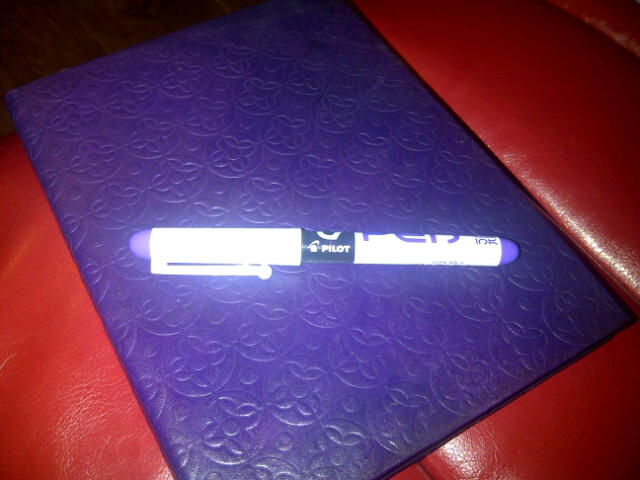
If you’re thinking of taking a pen

To explore your innermost thoughts

Then today’s the day to do it:

It’ll help unravel your knots.

The UN’s World Poetry Day

Is a chance to feel what’s real

In the deepest darkest depths

Of your starkest startling dreams.

Whether rage takes hold in angry red

Or the blues cry over the page

Trust what comes, let it all spill out:

Free your soul from its strangled cage.

Poem: The Creative Escapee

Your boss is always right, she says,

As she wields a pen of heavy red

That bites and wounds my worried words,

And my former self-belief goes blurred.


Your boss is always right, she mouths,

As my typo sends her humour south.

I hang my head, gut full of shame,

Have all my creative leaps gone lame?


Your boss is always right, she shouts,

As my brain cells begin to cower in doubt:

Is my work that flat, that nondescript,

Does her critique always have to be sour-lipped?


Your boss is always right, she yells,

As I reflect upon this straitjacket hell

Of rigid rules, of constant digs.

A model of how you can’t forgive.


Your boss is always right, she screams

Hysteria’s norm? That’s what it seems.

A dumbed-down doer is all she wants,

But there’s more to me than a size-12 font.


I may type your amends

With intentions well meant

But you can’t reach the real me

‘Cos I’m a Creative Escapee.


So yes, the boss is always right

But the red pen certainly doesn’t delight.

What rules my world is being in sync

With my authentic guide of true-self ink.

When too much criticism cripples creativity

My heart goes out to the artist who painted the first ever portrait of the Duchess of Cambridge. Paul Emsley’s work of art, on display in London’s National Portrait Gallery, has been slated by the media and the critics. One even called the painting ‘rotten’. And that criticism cut him deeply to the point of making him doubt the value of his work.

An article in London’s Evening Standard, Mr Emsley says the reaction to his portrait of Kate has been like a ‘witch hunt’. He is quoted as saying that some of the words said about the painting were vicious and personal, and “I’d be inhuman if I said it didn’t affect me”. He added that there came a point when he “doubted that the portrait of the duchess was any good”. But he has coped with it by going back into his studio and “getting on with it”.

All artists, whether they use a paintbrush, a pen or even a pair of ballet shoes, express themselves through their creativity. And that creativity can get crushed when some people believe they’re in a position to tut with superiority or wag their finger with self-righteousness. The act of creating can be fragile. And the door to the creative unconscious can be slammed shut by unthinking, unfeeling criticism.

Mr Emsley just got on with it. Not everyone can just ‘get on with it’ when they’ve had the kind of criticism that cuts to the core. But it’s the act of continuing to do what you believe in that encourages creativity to come out of hiding. Plus, Mr Emsley I’m sure can take some comfort from knowing that the postcard of Kate’s portrait is reportedly one of the fastest selling ones in the gallery.

If creativity helps you live longer, let’s give more freedom to our inner child

I do love psychological research that tells us how to live longer – especially if one of those behaviours or qualities is what I do already. So I was delighted to read on Psychology Today a report on a study that has evidence to show that being creative can help you live longer. (Well, at least among men, anyway).

Basically, the study of 1,349 men over 18 years shows that being open to new ideas and being willing to try new things can lengthen your lifespan, with a 12% reduction in mortality risk.

How does creativity help? It basically exercises the brain to keep it fit and it helps to reduce stress levels (or at least helps to manage stress better and make it less daunting). Creativity is recommended throughout the whole of life to cope better with the onset of aging, and our thoughts and feelings around it. (Who doesn’t feel better after having externalised our stresses through painting, writing or even dancing).

When you see kids playing with paints, being clever with crayons, and lacking any kind of self-consciousness when they sing, dance and play, I often wonder where that innocent sense of playfulness and creativity goes when we grow up.

Let’s bring our inner children out more often and let them have a play. I think that the creativity the researchers talk about is also related to a sense of fun and a feeling that life is still full of wonder and curiosity, no matter what age you are.

Am I the only writer for whom an MA achievement is an anticlimax?

I’ve been trying to put a name to the feeling that’s mine right now – and all of London’s. Not to big myself up, or minimise the impact of London 2012 and the phenomenal achievements of the Olympians and Paralympians. But there’s something in the air that I’ve been trying to feel, own, and put into words. Without sounding ungrateful. Or like a next-project-obsessed workaholic.

Even the best parties have to come to an end.

OK, so I may be both of those things. At times. But this feeling is like the puckered balloons the day after a mega party. The dust-covered peanuts you find down your sofa weeks after a dinner party. And the sense of having loved (all the guests) and then lost (when they all leave) when you’ve worked so hard and wanted to make every detail a winning, talked-about one. Which parties generally are, and they certainly were for the million people I had to say ‘excuse me’ to, on a way to a meeting through central London at lunchtime yesterday. A million people lined the streets to salute the London 2012 stars.

But my individual deflated feeling, in the midst of all this post-Olympic partying, started with the certificate arriving for my MA. Continue reading

Why I think my best writing has nothing to do with me at all

I kind of hate to say this, but I think my best writing comes from another place totally beyond my control, my life, my consciousness. I’m talking about the kind of writing I read back the next day and think ‘where the **** did that come from?!’ (in a good way, I mean).

My flashes of inspiration come from a dark cave of pedestrian writing. (pic: istockphoto.com/rozbyshaka)

I know I have flashes of brilliance in my creative writing: times when I’m in awe of the written word to convey a feeling, a moment, a heartbeat. But those flashes are little chinks of light in what can sometimes feel like a dark cave of inane drivel and self-obsessed tosh.

Getting out of the way

I’ve realised that my best writing comes when I Continue reading

How to make reading a treat, not a chore, for children

Allowing children to read ‘cool’ books rather than stiff old tomes the authorities think they should be ploughing through is the key to stimulating a creative love of reading. That’s according to a wonderful little article in the Evening Standard, Forget Austen, there are no explosions, which quotes Steven Moffat, the writer behind successful TV series Doctor Who and Sherlock.

Give a child a ‘cool’ book and she’ll devour it. Boring books get left on the shelf. (Pic: istockphoto.com)

He says: “We should give [children] really cool books that they think are exciting. It doesn’t matter if they are good books as long as they read. Reading makes you better at English. Reading a lot makes you want to read better books.”

He’s so right. I’m a professional writer now who can’t bear to flirt with badly written fiction. Life is far too short for that, and my bookshelves are stuffed with books I’d much rather commit to. However, as a 10-year-old child, I devoured just about every Continue reading

The two decisions I made that helped me finish my novel

Like many writers, I’d been working on a novel for years. The idea for it came into my head, skittered across the page for a while, then exited stage right. I dragged it back on to perform, reluctantly, for many years – and each time it looked more awkward than before, and with increasingly palpable and self-destructive stage fright.

I so wished I had allowed the creative novel-writing impetus more time and space in my life while it was fresh and energetic, rather than cowed and defeated. Six years on – and already six months into the grace period of my extended Creative Writing MA deadline, with very little developmental or restorative work on my manuscript – I was considering asking for another extension.

Except that this time Continue reading

why I chose a bashed notebook over a pristine one

Oh, how many lovely new pristine notebooks do I have in my drawers, on my shelves, and lined up proudly on my desk.

A self-confessed notebook addict, I’m unable to pass a stationery store without a little peak at the perky new notebooks that could steal my attention, part me with my pounds, and then remain awesome but abandoned on my desk.

I got a posh notebook as a present for Christmas a couple of years ago –  complete with inscription from the gifter – and somehow I’ve never felt worthy of using it. There has never been an occasion when I thought this book would be suitable. So it sits, in its shiny-clothed isolation – like a posh dress waiting for a gold-rimmed invitation – not being used, loved or creative.

An already damaged notebook has more chance of encouraging my creative writing.

It was in the want, rather than need, of a new journal, that I passed by the lovely Paperchase and happened to spot the perfect notebook for me. Twice the price of what I would usually pay, but leather bound and worth it. The lines are closer together – I dislike those fat-lined notebooks, as they need so few words to fill a page, and I feel my thoughts need lines that are narrower and somehow more intimate. The leather is already damaged, as though someone had bent over the corner on the front and pressed a hairbrush to the back. The paper inside is yellowing, and perfect for use with a fountain pen.

My new purchase was not perfect. I checked out all three purple leather journals in the shop to see which one fitted me best. All three smelt of that ‘old’ leather that you get in second-hand shops. The book I chose felt wise: its pattern was innate, it had been around the block a few times, and it was comfortable with its lines, its bends, and its creases.

This felt like Continue reading